
Hip Arthroscopy in Bountiful and Layton, UT
Persistent hip pain, stiffness, catching, or limited mobility may be caused by problems involving the labrum, cartilage, bone, or other structures within the hip joint. Hip arthroscopy is a minimally invasive procedure that uses a small camera and specialized instruments to diagnose and treat certain hip conditions. Dr. Joshua Hickman provides hip and joint care for patients in all of the intermountain west and Utah including Bountiful, Layton, and surrounding Northern Utah communities. Dr. Hickman evaluates each patient's symptoms, imaging, diagnosis, activity level, and treatment history to determine whether hip arthroscopy is appropriate. Patients seeking hip arthroscopy in Bountiful or Layton, UT can discuss minimally invasive treatment options during an individualized orthopedic consultation.
Hip Arthroscopy
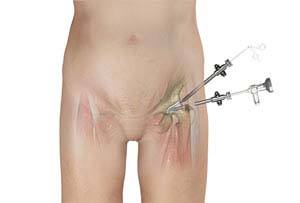
What is Hip Arthroscopy?
Arthroscopy, also referred to as keyhole or minimally invasive surgery, is a procedure in which an arthroscope is inserted into a joint to check for any damage and repair it simultaneously.
An arthroscope is a small, fiber-optic instrument consisting of a lens, light source, and video camera. The camera projects an image of the inside of the joint onto a large screen monitor allowing the surgeon to look for any damage, assess the type of injury, and repair the problem.
Indications for Hip Arthroscopy
Hip arthroscopy is a surgical procedure performed through very small incisions to diagnose and treat various hip conditions including:
- Removal of torn cartilage or bone chips that cause hip pain and immobility.
- Repair a torn labrum: The labrum is a fibrous cartilage ring which lines the acetabular socket.
- Removal of bone spurs or extra bone growths caused by arthritis or an injury.
- Removal of part of the inflamed synovium (lining of the joint) in patients with inflammatory arthritis. This procedure is called a partial synovectomy.
- Repair of fractures or torn ligaments caused by trauma.
- Evaluation and diagnosis of conditions with unexplained pain, swelling, or stiffness in the hip that does not respond to conservative treatment.
Procedure of Hip Arthroscopy
Hip arthroscopy is performed under regional or general anesthesia depending on you and your surgeon's preference.
Your surgeon will make 2 or 3 small incisions about 1/4 inches in length around the hip joint. Through one of the incisions an arthroscope is inserted. Along with it, a sterile solution is pumped into the joint to expand the joint area and create room for the surgeon to work.
The larger image on the television monitor allows the surgeon to visualize the joint directly to determine the extent of damage so that it can be surgically treated.
Surgical instruments will be inserted through other tiny incisions to treat the problem.
After the surgery, the incisions are closed and covered with a bandage.
Advantages of Hip Arthroscopy
The advantages of hip arthroscopy over the traditional open hip surgery include:
- Smaller incisions
- Minimal trauma to surrounding ligaments, muscles, and tissues
- Less pain
- Faster recovery
- Lower infection rate
- Less scarring
- Earlier mobilization
- Shorter hospital stay
Risks and Complications of Hip Arthroscopy
As with any surgery, there are potential risks and complications involved. It is very important that you are informed of these risks before you decide to proceed with hip arthroscopy surgery. Possible risks and complications include:
- Infection at the surgical incision site or in the joint space
- Nerve damage which may cause numbness, tingling, pain, and weakness
- Excess bleeding into the joint, a condition called hemarthrosis
- Blood clots may form inside the deep veins of the legs which can travel to the lungs (pulmonary embolism).
Postoperative Care following Hip Arthroscopy
Your doctor may advise you to take certain precautions to promote faster recovery and prevent further complications. These include:
- Taking pain medications as prescribed.
- Use of crutches to prevent or limit bearing weight on the operated hip
- Physical therapy exercises should be performed to restore normal hip function and improve flexibility and strength
- Eating a healthy diet and avoiding smoking will help in faster healing and recovery
- Avoid activity which involves lifting heavy things or strenuous exercises for first few weeks after surgery
With advances in surgical techniques, arthroscopy plays an important role in diagnosis and Treatments for hip diseases. Also, patients can anticipate a quicker recovery with less postoperative complications following hip arthroscopy surgery.
Why Choose Dr. Joshua Hickman for Hip Arthroscopy in Bountiful and Layton, UT
- Specialized hip care: Dr. Hickman's practice focuses on hip and knee conditions, joint replacement, reconstruction, and preservation.
- Minimally invasive treatment: Hip arthroscopy uses small incisions and a camera to access and visualize the hip joint.
- Individualized treatment planning: Recommendations are based on the patient's symptoms, diagnosis, imaging, activity level, and treatment goals.
- Treatment of multiple hip conditions: Depending on the diagnosis, arthroscopy may be used to address labral tears, cartilage damage, bone abnormalities, and other intra-articular problems.
- Convenient Northern Utah locations: Patients can access orthopedic care in Bountiful and Layton, Utah.
Hip Arthroscopy FAQs
What is hip arthroscopy?
Hip arthroscopy is a minimally invasive surgical procedure used to examine and treat certain problems inside the hip joint. A small camera called an arthroscope is inserted through a small incision, allowing the surgeon to view the joint on a monitor and use specialized instruments through additional small incisions.
What conditions can hip arthroscopy treat?
Depending on the individual diagnosis, hip arthroscopy may be used to treat conditions involving the labrum, cartilage, bone, or joint lining. Procedures may include labral repair, removal of loose cartilage or bone fragments, treatment of bone abnormalities, or partial synovectomy.
What is a hip labral tear?
The labrum is a ring of cartilage around the socket of the hip joint. A tear can cause symptoms such as hip pain, clicking, catching, or reduced mobility. In appropriately selected patients, hip arthroscopy may be used to repair or otherwise treat a damaged labrum.
Is hip arthroscopy minimally invasive?
Yes. Hip arthroscopy is performed through small incisions rather than the larger incision generally associated with traditional open hip surgery. The surgeon uses an arthroscope and specialized instruments to access the joint.
What are the potential benefits of hip arthroscopy?
Potential benefits may include smaller incisions, less disruption to surrounding tissues, reduced scarring, and a potentially shorter recovery compared with some open surgical procedures. Individual results and recovery times vary.
Who may be a candidate for hip arthroscopy?
Patients with certain hip conditions that cause persistent symptoms may be candidates for arthroscopy, particularly when appropriate nonsurgical treatments have not provided adequate relief. A comprehensive evaluation is necessary to determine whether arthroscopy is suitable.
What happens during hip arthroscopy?
After anesthesia is administered, the surgeon creates small incisions around the hip and inserts an arthroscope to visualize the joint. Additional instruments can be inserted through other incisions to diagnose and treat the identified problem.
How long does recovery take after hip arthroscopy?
Recovery varies depending on the condition being treated and the specific procedure performed. Some patients may initially need crutches or limited weight-bearing and may participate in physical therapy to restore hip strength, flexibility, and function. Your surgeon will provide individualized recovery instructions.
What are the risks of hip arthroscopy?
Potential complications include infection, bleeding, blood clots, nerve irritation or injury, and other surgical complications. Your orthopedic surgeon will discuss the potential risks and benefits before recommending surgery.
When should I see a hip specialist?
Consider an orthopedic evaluation if persistent hip pain, stiffness, clicking, catching, or reduced mobility is interfering with your daily activities despite conservative treatment. An evaluation can help identify the underlying cause and determine appropriate treatment options.
Where can I get hip arthroscopy in Bountiful or Layton?
Dr. Joshua Hickman provides specialized hip and joint care in Bountiful and Layton, Utah. Patients with persistent hip symptoms can schedule an evaluation to discuss diagnosis, nonsurgical treatments, hip arthroscopy, and other available treatment options.
Find Relief for Persistent Hip Pain in Bountiful and Layton, UT
Persistent hip pain, stiffness, clicking, or limited mobility can interfere with work, exercise, and everyday activities. If conservative treatments have not provided adequate relief, hip arthroscopy may be an option for treating certain conditions inside the hip joint.
Dr. Joshua Hickman provides specialized hip care for patients in all of the intermountain west and Utah including Bountiful, Layton, and surrounding Northern Utah communities. Schedule an orthopedic consultation to discuss your symptoms, diagnosis, and whether hip arthroscopy may be appropriate for you. Contact Dr. Joshua Hickman's office today to schedule a hip evaluation in Bountiful or Layton, UT.
Related Topics:
- Total Hip Replacement
- Anterior Hip Replacement
- Revision Hip Replacement
- Robotic Assisted Hip Surgery
- Outpatient Hip Replacement
- Posterior Hip Replacement
- Mako Robotic Total Hip Replacement
- Birmingham Hip Resurfacing
- Hip Arthroscopy
- Hip Preservation
- Hip Implants
- Hip FAO Surgery
- Hip Fracture Prevention
- After Hip Replacement
- Hip Injections
- Physical Therapy