
Hip Preservation Surgery in Bountiful and Layton, UT
Hip preservation procedures are designed to treat problems affecting the structure and function of the hip before advanced joint damage requires hip replacement. Depending on the diagnosis, treatment may include hip arthroscopy, labral repair, osteotomy procedures, or other surgical techniques intended to improve hip mechanics and protect the natural joint.
Conditions that may be evaluated for hip preservation treatment include Femoroacetabular impingement (FAI), hip dysplasia, labral tears, hip instability, and certain other structural hip conditions. Dr. Hickman evaluates each patient's symptoms, imaging, activity level, and hip anatomy to determine which treatment approach may be appropriate.
Hip Preservation Surgery
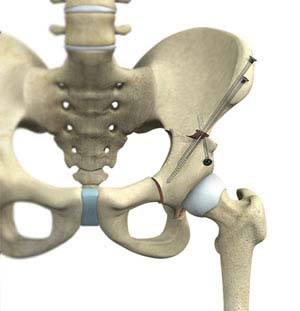
The hip is a ball and socket joint comprising of the femur (thighbone) and the pelvic bone. The head of the femur (ball) articulates with a cavity (socket) called the acetabulum in the pelvic bone. To facilitate smooth and frictionless movement of the hip joint, the articulating surfaces of the femur head and acetabulum are covered by spongy articular cartilage. Injury, wear-and-tear and certain diseases can result in the wearing away of the cartilage tissue, causing painful rubbing of bones.
Hip replacement surgeries have long been the choice of treatment, where the damaged parts of the joint are removed and replaced with prosthesis. However, in young active patients, the prostheses are highly prone to wear-and-tear, and the need for repeat surgery. Hip preservation is a surgery that overcomes the limitations of joint replacement.
Indications of Hip Preservation Surgery
Some of the conditions indicated for hip preservation surgery include:
- Femoroacetabular impingement (FAI): friction in the hip joint from abnormal bony irregularities
- Hip dislocation: head of the femur moves out of the socket
- Hip dysplasia: congenital hip condition characterized by a shallow acetabulum
- Labral tear: tear or separation of the labrum, a cartilaginous ring that surrounds the socket and seals the hip joint
- Avascular necrosis: disrupted blood flow to the hip joint, causing death of bone tissue
Hip Preservation Surgery Procedure
Hip preservation surgery includes various techniques:
- Periacetabular osteotomy: Periacetabular osteotomy is a surgical procedure to treat hip dysplasia. This involves cutting the acetabulum from the pelvic bone and repositioning it with screws to allow for a better fit of the femoral head. The procedure reduces pain, restores function and prevents further deterioration of the hip joint, thereby increasing the life of the hip joint and postponing total hip replacement.
- Surgical hip dislocation: Surgical hip dislocation is a surgical technique that involves the dislocation of the hip joint during surgery to facilitate easy access to the inside tissues of the hip joint. It helps your surgeon to clearly view and treat abnormalities present deep into the hip joint.
- Femoral osteotomy: An osteotomy is a surgical procedure that involves cutting and reshaping of a bone. The femur is cut at the end close to the hip joint and realigned so that it forms a normal angle. This improves the distribution of force placed on the joint and prevents wear-and-tear of the cartilage.
- Hip arthroscopy: Arthroscopy, also referred to as keyhole or minimally invasive surgery, is a procedure in which an arthroscope is inserted into a joint to check for any damage and repair it simultaneously. Hip arthroscopy is a surgical procedure performed through very small incisions to diagnose and treat various hip conditions.
The various hip preservation surgeries for severe hip pain and dysfunction in young and active patients have been found to be beneficial and avoid or delay the need for hip replacement surgery.
Why Choose Dr. Joshua Hickman for Hip Preservation Surgery in Bountiful and Layton, UT
- Specialized hip care: Dr. Hickman's practice focuses on hip and knee conditions, including joint preservation and reconstruction.
- Joint-preserving treatment: Hip preservation procedures are designed to address certain structural problems while maintaining the patient's natural hip whenever possible.
- Individualized evaluation: Treatment recommendations take into account symptoms, imaging, hip anatomy, activity level, and the underlying diagnosis.
- Multiple treatment approaches: Depending on the condition, hip preservation may involve arthroscopy, labral treatment, osteotomy, or other procedures.
- Northern Utah convenience: Patients can access orthopedic care in Bountiful and Layton, Utah.
Hip Preservation Surgery FAQs
What is hip preservation surgery?
Hip preservation surgery refers to procedures designed to treat certain hip conditions while preserving the patient's natural hip joint. Depending on the underlying problem, treatment may include hip arthroscopy, labral repair, or procedures that correct abnormal hip structure.
Who may benefit from hip preservation surgery?
Hip preservation is generally considered for appropriately selected patients with hip problems that can potentially be corrected before advanced joint damage develops. Younger or active patients with structural abnormalities may be evaluated for these procedures.
What conditions can hip preservation surgery treat?
Depending on the procedure and individual circumstances, hip preservation may be used to treat conditions such as Femoroacetabular impingement, hip dysplasia, labral tears, hip instability, and certain structural abnormalities of the hip.
What is Femoroacetabular impingement?
Femoroacetabular impingement, or FAI, occurs when abnormal contact develops between the femur and acetabulum during hip movement. This can cause pain and may contribute to damage involving the labrum or cartilage.
What is hip dysplasia?
Hip dysplasia occurs when the hip socket does not adequately cover or support the femoral head. In appropriately selected patients, procedures such as periacetabular osteotomy may be used to reposition the socket and improve hip stability and mechanics.
What is a periacetabular osteotomy?
A periacetabular osteotomy, or PAO, is a surgical procedure used primarily to treat certain forms of hip dysplasia. The acetabulum is surgically repositioned to improve coverage of the femoral head and provide better hip mechanics.
Is hip arthroscopy a hip preservation procedure?
Yes. Hip arthroscopy is a minimally invasive procedure that can be used as part of a hip preservation treatment plan. Depending on the diagnosis, arthroscopy may be used to treat labral tears, Femoroacetabular impingement, cartilage problems, and other conditions within the hip joint.
Can hip preservation surgery prevent a hip replacement?
Hip preservation procedures are intended to treat certain underlying hip problems and may help delay or potentially avoid hip replacement in appropriately selected patients. However, outcomes depend on the specific diagnosis, severity of joint damage, and individual patient factors. Hip preservation cannot guarantee that a future hip replacement will not be necessary.
Is hip preservation surgery minimally invasive?
Some hip preservation procedures, such as hip arthroscopy, are minimally invasive and use small incisions. Other procedures, including certain osteotomies, are more extensive. The surgical approach depends on the condition being treated.
How long does recovery take after hip preservation surgery?
Recovery varies significantly depending on the procedure performed. Some procedures may require temporary use of crutches and activity restrictions followed by physical therapy. Your surgeon will provide a personalized recovery plan based on the specific procedure.
When should I see a hip specialist about hip pain?
Consider an orthopedic evaluation if hip pain persists, limits physical activity, causes clicking or catching, or interferes with daily activities despite conservative treatment. Early evaluation may help identify structural problems that could be candidates for joint-preserving treatment.
Where can I get hip preservation surgery in Bountiful or Layton?
Dr. Joshua Hickman provides specialized hip care for patients in all of the intermountain west and Utah including Bountiful, Layton, and surrounding Northern Utah communities. An evaluation can help determine whether hip preservation surgery or another treatment option is appropriate for your condition.
Preserve Your Natural Hip in Bountiful and Layton, UT
Dr. Joshua Hickman provides specialized hip care for patients in all of the intermountain west and Utah including Bountiful, Layton, and surrounding Northern Utah communities. Schedule a consultation to discuss your symptoms, diagnosis, activity goals, and available hip preservation options.
Contact Dr. Joshua Hickman's office today to schedule a hip evaluation in Bountiful or Layton, UT.
Related Topics:
- Total Hip Replacement
- Anterior Hip Replacement
- Revision Hip Replacement
- Robotic Assisted Hip Surgery
- Outpatient Hip Replacement
- Posterior Hip Replacement
- Mako Robotic Total Hip Replacement
- Birmingham Hip Resurfacing
- Hip Arthroscopy
- Hip Preservation
- Hip Implants
- Hip FAO Surgery
- Hip Fracture Prevention
- After Hip Replacement
- Hip Injections
- Physical Therapy