
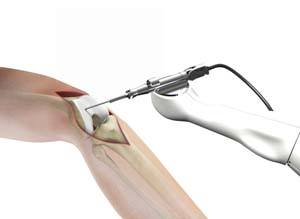
What is Partial Knee Resurfacing?
Partial knee replacement is an alternative to total knee replacement in patients with arthritis on only one side of the knee. Partial knee replacement is a surgical procedure which involves resurfacing and replacement of only the diseased surface of the joint instead of the entire joint.
The knee has three compartments, the medial (inside), the lateral (outside) and the patellofemoral (kneecap) compartment. Partial knee resurfacing may be an option depending on the affected surface. During the procedure, your surgeon removes only the damaged area of the bone in the affected knee and fits the implant to that bone.
Partial Knee Resurfacing Procedure
Unicompartmental knee resurfacing is a procedure that resurfaces the affected inner aspect of the femur and tibia. During the procedure, a small incision is made along the affected knee exposing the knee joint. The damaged portion of the meniscus along with a part of bone may be removed to create space for the new plastic component. The plastic component is fixed into the new created area.
Now, the damaged part of the femur along with little bone is removed to create room for the new femoral component. The new metal component is fixed with cement. After fixing the femoral and tibial components the knee is taken through a range of movements. Patellofemoral knee resurfacing is a procedure that resurfaces only the worn-out kneecap or patella and the groove in the thighbone (trochlea).
The procedure is performed using an arthroscope, a small fiber-optic instrument with a tiny lens and a video camera. Through the tiny incisions, the damaged part of the patella and trochlea will be removed to create room for the artificial component. The new component is fixed in place with the use of bone cement and the knee is taken through a range of movements.
Advantages of Partial Knee Resurfacing
Advantages of partial knee resurfacing include:
- Minimal incisions
- Minimal hospitalization
- Reduced blood loss
- Less scarring
- Quick recovery
- Less post-operative pain
Complications of Partial Knee Resurfacing
Although partial knee resurfacing is an effective method in repairing the damaged part of the knee, it is associated with certain complications such as infection, blood clot formation, damage to nerves and blood vessels, wear, dislocation and ligament injuries.
If you wish to be advised on the most appropriate treatment for your hip or knee condition, please call ext. 111 to schedule an appointment or request an appointment online.
Related Topics:
- Knee Arthroscopy
- Unicompartmental Knee Replacement
- Minimally Invasive Knee Replacement
- Patellofemoral Knee Replacement
- What is New in Knee Replacement
- Computer Navigation for Total Knee Replacement
- Total Knee Replacement
- Custom Knee Replacement Surgery
- Revision Knee Replacement
- Robotic Assisted Partial Knee Surgery
- Mako Robotic Knee Replacement
- Signature Knees
- Custom-fitted Total Knee Arthroplasty
- Partial Knee Resurfacing
- High Tibial Osteotomy
- Tibial Tubercle Osteotomy
- ACL Reconstruction
- Outpatient Total Knee Replacement
- Tricompartmental Knee Replacement
- After Knee Replacement
- Knee Implants
- Autologous Chondrocyte Implantation
- Partial Meniscectomy
- Meniscal Surgery
- Partial Knee Replacement
- Pharmacological
- Platelet Rich Plasma
- Viscosupplementation
- Cortisone Injection
- Physical Therapy