
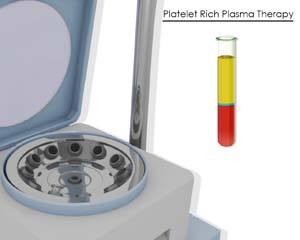
What is Platelet Rich Plasma Therapy ?
Our blood consists of a liquid component known as plasma. It also consists of three main solid components which include red blood cells (RBCs), white blood cells (WBCs), and platelets. Platelets play an important role in forming blood clots. They also consist of special proteins, known as growth factors, which help with our body's healing process. Platelet-rich plasma or PRP is a high concentration of platelets and plasma. A normal blood specimen contains only 6% platelets, while platelet-rich plasma contains 94% platelets and 5 to 10 times the concentration of growth factors found in normal blood, thus providing greater healing properties.
What are the Indications for PRP?
PRP is a relatively new treatment method for several orthopedic conditions such as muscle, ligament, and tendon injuries, arthritis and fractures. PRP injections can help alleviate painful symptoms, promote faster healing and delay joint replacement surgeries.
How is Platelet Rich Plasma Therapy Performed?
Your doctor will first draw about 10 ccs of blood from the large vein in your elbow. The blood is then spun in a centrifuge machine for about 10 to 15 minutes to separate the platelets from the remaining blood components.
The injured part of your body is then anesthetized with a local anesthetic. The platelet-rich portion of your blood is then injected into the affected area. In some cases, your doctor may use ultrasound guidance for proper needle placement.
What is the Post-Procedural Care for PRP?
- It is normal to feel some discomfort at the injection site for a few days after your procedure.
- You will be prescribed pain medications as needed by your doctor.
- You may use cold compresses to alleviate your symptoms.
- You will be instructed to stop any anti-inflammatory medications.
- You may resume your normal activities but should avoid any strenuous activities such as heavy lifting or exercises.
What are the Risks and complications of PRP?
There are minimal risks associated with PRP injections. Some of the potential risks include
- Increased pain at the injection site
- Infection
- Damage to adjacent nerves or tissues
- Formation of scar tissue
- Calcification at the injection site
If you wish to be advised on the most appropriate treatment for your hip or knee condition, please call ext. 111 to schedule an appointment or request an appointment online.
Related Topics:
- Knee Arthroscopy
- Unicompartmental Knee Replacement
- Minimally Invasive Knee Replacement
- Patellofemoral Knee Replacement
- What is New in Knee Replacement
- Computer Navigation for Total Knee Replacement
- Total Knee Replacement
- Custom Knee Replacement Surgery
- Revision Knee Replacement
- Robotic Assisted Partial Knee Surgery
- Mako Robotic Knee Replacement
- Signature Knees
- Custom-fitted Total Knee Arthroplasty
- Partial Knee Resurfacing
- High Tibial Osteotomy
- Tibial Tubercle Osteotomy
- ACL Reconstruction
- Outpatient Total Knee Replacement
- Tricompartmental Knee Replacement
- After Knee Replacement
- Knee Implants
- Autologous Chondrocyte Implantation
- Partial Meniscectomy
- Meniscal Surgery
- Partial Knee Replacement
- Pharmacological
- Platelet Rich Plasma
- Viscosupplementation
- Cortisone Injection
- Physical Therapy